
Anointing Oils
How to Use Anointing Oils
Anointing oils are meant to be used slowly and intentionally. Begin by placing a small amount of oil on your fingertips and pausing for a breath before application. This brief moment of attention matters—it signals a shift from doing to being, allowing the body and nervous system to receive rather than rush.
Apply the oil directly to the skin, focusing on areas where the body naturally carries rhythm and awareness. Common places include the wrists, chest, back of the neck, temples, behind the ears, soles of the feet, or over the heart. These points are traditionally chosen because they respond quickly to touch and scent, helping the oil’s effects integrate throughout the body.
As you anoint, let your touch be gentle but deliberate. This is not about rubbing quickly or applying more—it is about presence. Many people find it helpful to pair the application with a quiet intention, prayer, or simple phrase, spoken aloud or inwardly. The words do not need to be elaborate; sincerity and clarity are what give them strength.
Anointing oils work best when used consistently, becoming part of a daily or situational ritual. Some people anoint in the morning to set the tone for the day, others in the evening to release stress and return to themselves. Oils can also be used during moments of transition—before sleep, after emotional strain, during grief, or when grounding and protection are needed.
Above all, anointing is a relationship, not a rulebook. Trust your instincts. Let the body guide where and when the oil is applied. Over time, the practice becomes familiar and steady—a quiet act of care that reconnects you to yourself, the plants, and the rhythm of intentional living.
when to use anointing oil
Manifesting & Intention Setting
Manifesting & Intention Setting
Manifesting & Intention Setting

Anointing oils have long been used to anchor intention into the physical world. When manifesting or setting intention, the oil serves as a focal point, helping bring clarity, commitment, and presence to what you are calling in.
Apply a small amount of oil to the wrists, hands, chest, or over the heart (for skin-safe oils). Pause, breathe, and clearly name your intention—aloud or inwardly. This practice works best when done consistently, reinforcing alignment between thought, action, and belief.
Manifestation is not about force; it is about coherence. Anointing helps create that coherence through repetition and embodied focus.
Protection & Warding
Manifesting & Intention Setting
Manifesting & Intention Setting
Ritual Use Only – Not for Skin)
Protection and warding oils are traditionally used to consecrate space and establish boundaries, not for direct application to the body. Many protective botanicals are powerful in nature and are meant to work through placement and intention, not absorption through skin.
Use these oils to anoint doorframes, thresholds, window frames, bed frames, boundary markers, stones, candles, or protective objects. Apply sparingly with a fingertip, cloth, or cotton swab while stating or holding a clear intention of protection, peace, and sovereignty.
Warding is not aggressive work—it is stabilizing. It clarifies what is welcome and what is not.
Emotional Alchemy & Release
Manifesting & Intention Setting
Clarity, Focus, Decision-Making & Discernment
Anointing oils are especially effective during emotional processing, grief, anger, exhaustion, or transition. In these moments, the practice is not about fixing emotions, but about creating space for movement and release.
Apply a skin-safe oil to the chest, hands, or feet. Slow your breath and allow whatever needs to surface to do so without judgment. Many people find it helpful to anoint before journaling, rest, or quiet reflection.
This practice supports emotional regulation by engaging touch, scent, and intention together—helping the body let go of what it no longer needs to carry.
Clarity, Focus, Decision-Making & Discernment
Clarity, Focus, Decision-Making & Discernment
Clarity, Focus, Decision-Making & Discernment
For moments that require clear thinking, grounded focus, or difficult choices, anointing oils can help steady the mind and reduce internal noise.
Apply oil to the temples, back of the neck, wrists, or hands (for skin-safe formulas). Take a few intentional breaths and ask for clarity rather than answers. Discernment arises when the body is calm enough to recognize what feels aligned—and what does not.
Used regularly, this practice helps sharpen intuition while keeping it grounded in awareness and self-trust.
Yoga, Breathwork & Meditation
Clarity, Focus, Decision-Making & Discernment
Yoga, Breathwork & Meditation
Anointing oils pair naturally with embodied practices such as yoga, breathwork, and meditation. The oil acts as a sensory anchor, helping the body settle more quickly into presence.
Apply oil before practice to the chest, feet, or hands, or use it to anoint a mat, cushion, or meditation space. Let the scent and ritual mark the transition from ordinary activity into intentional practice.
Over time, the body associates the oil with calm, focus, and inward attention, deepening the practice through repetition.
Divination & Intuitive Work
Clarity, Focus, Decision-Making & Discernment
Yoga, Breathwork & Meditation
Before divination, intuitive reading, or spiritual listening, anointing oils are used to quiet distraction and strengthen internal awareness.
Apply a skin-safe oil to the wrists, temples, or hands, or anoint tools such as cards, stones, pendulums, or journals. This signals a shift into receptive mode—listening rather than seeking control.
Anointing before intuitive work supports discernment, helping ensure that insight comes from a grounded, steady place rather than urgency or emotion.
Healing & Energy Work
Change Catalyst, Spiritual Awakening & Navigating Transition
Strength, Will & Endurance
Healing oils are used to support emotional, energetic, and spiritual restoration. In traditional practice, healing was not rushed—it was supported through consistent, gentle care and intentional touch.
For skin-safe oils, apply to the chest, heart space, hands, or feet. For hands-on or hands-off energy work, oils may also be used to anoint the practitioner’s palms, tools, or the surrounding space. The focus is on steadiness, regulation, and integration rather than immediate change.
This practice supports the body’s natural ability to rebalance by signaling safety, presence, and care.
Strength, Will & Endurance
Change Catalyst, Spiritual Awakening & Navigating Transition
Strength, Will & Endurance
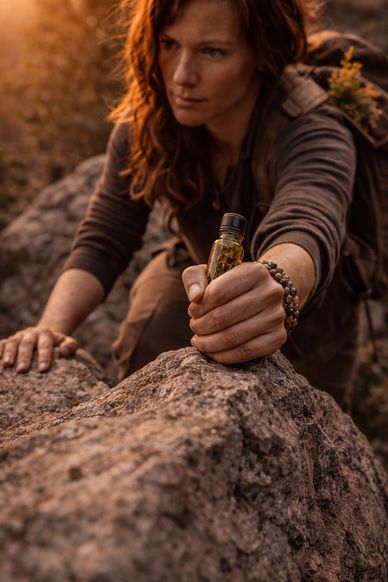
Anointing oils used for strength and endurance are meant to support resolve, stamina, and follow-through, especially during long or demanding periods.
Apply a skin-safe oil to the wrists, back of the neck, or soles of the feet before beginning difficult work, returning to routine, or facing sustained effort. This practice reinforces commitment and helps anchor intention into action.
Strength work is not about forcing momentum—it is about staying power, showing up again and again with clarity and purpose.
Change Catalyst, Spiritual Awakening & Navigating Transition
Change Catalyst, Spiritual Awakening & Navigating Transition
Change Catalyst, Spiritual Awakening & Navigating Transition
During times of transition—loss, growth, relocation, recovery, or rebirth—anointing oils are used to help the body and mind move with change rather than resist it.
Apply a skin-safe oil to the chest, hands, or feet during moments of reflection or closure. Oils may also be used to anoint journals, candles, or personal objects associated with endings or new beginnings.
This practice supports emotional and energetic flexibility, helping transitions unfold with steadiness instead of disruption.
Cord Cutting & Energetic Separation
Cord Cutting & Energetic Separation
Change Catalyst, Spiritual Awakening & Navigating Transition
Cord cutting oils are used to support the intentional release of unhealthy attachments, patterns, or energetic ties. This work is deliberate and clarifying, not aggressive.
These oils are typically used in ritual rather than on the skin. Anoint candles, written intentions, symbolic objects, or boundary markers while clearly naming what is being released. The goal is separation with sovereignty—restoring personal space and clarity.
Cord cutting work is most effective when approached calmly, with closure rather than confrontation.
Attraction & Sex Magic
Cord Cutting & Energetic Separation
Angelic Guidance & Communication
Anointing oils have long been used to awaken attraction, deepen intimacy, and enhance magnetic presence. In traditional practice, sex magic is not about excess or performance—it is about focus, embodiment, and intentional connection.
For skin-safe oils, apply sparingly to pulse points, the chest, thighs, or lower abdomen, depending on comfort and intention. Oils may also be used to anoint candles, lingerie, personal items, or ritual space to support attraction and intimacy without direct skin contact.
This work is most effective when grounded in consent, self-awareness, and clarity of desire. Anointing becomes a way to align the body, emotions, and intention—allowing attraction to arise naturally rather than through force or manipulation.
Angelic Guidance & Communication
Cord Cutting & Energetic Separation
Angelic Guidance & Communication
Angelic guidance work focuses on clarity, reassurance, and ordered insight rather than prediction or control. Oils used for this purpose are traditionally paired with prayer, reflection, and intentional alignment.
Apply a skin-safe oil to the wrists, heart space, or crown, or anoint candles, devotional objects, or written prayers. Allow the practice to quiet mental noise and support discernment, listening for guidance that feels calm, coherent, and steady.
This work is about receiving support and perspective beyond personal agitation, grounding insight in peace rather than urgency.